
Every once in a while, the art world pauses.
Not for a trend. Not for a fair. Not for another predictable headline.
But for a moment that feels… larger.
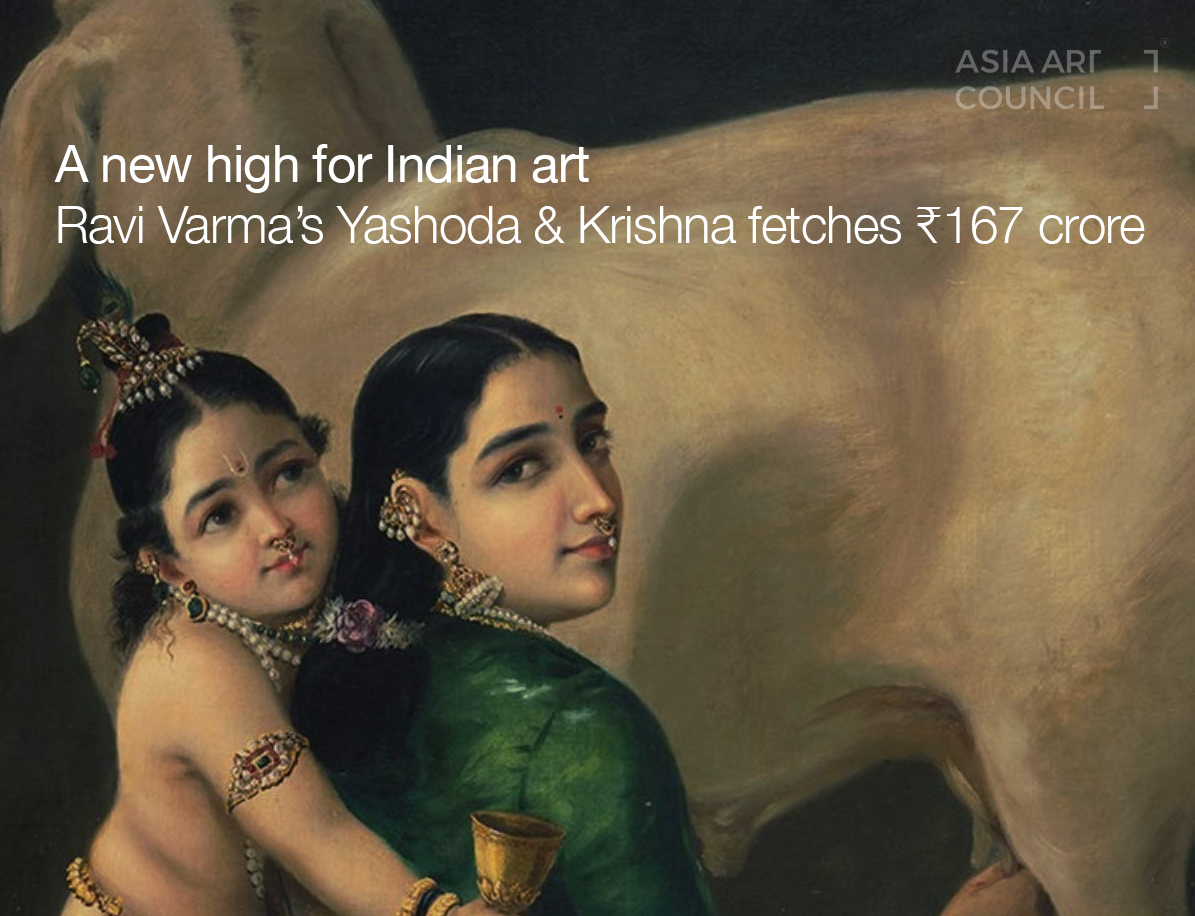
This week, that moment came from a quiet, intimate painting, Raja Ravi Varma’s Yashoda and Krishna,
which just sold for a staggering ₹167 crore.
Why this feels bigger than a record
Yes, it’s now the highest price ever achieved by an Indian artwork.
Yes, it happened in a market that’s been anything but stable.
But if you’ve been watching closely, you’ll know this isn’t just about the number.
This feels like a correction. A long overdue one.
For decades, Indian art has sat in a strange space, admired, exhibited, studied…
but often undervalued when placed beside Western masters.
And then suddenly this. Not a polite increase. A leap.
Ravi Varma knew what he was doing
Long before auction houses and estimates, Ravi Varma did something radical.
He took gods off their pedestals and brought them into our homes.
He gave them skin, softness, emotion. He made divinity feel familiar.
And in Yashoda and Krishna, you see that genius at its most effortless.
There’s no grand spectacle. No theatricality.
Just a mother. A child.
A moment you’ve seen a thousand times in real life except here, it holds mythology inside it.
That’s not just painting. That’s translation.
So why now?
Why does a work like this suddenly command ₹167 crore?
Because the context has changed.
Indian collectors have changed. Global attention has shifted.
And perhaps most importantly there’s a growing refusal to undervalue our own cultural language.
In a world where markets are cautious, this sale didn’t feel cautious at all. It felt certain.
What this means for the rest of us
If you’re an artist, this is a reminder, roots travel.
If you’re a collector, this is a signal, depth holds value.
If you’re part of the ecosystem, galleries, platforms, communities,
this is your moment to pay attention.
Because moments like this don’t just celebrate the past.
They reshape the future.
One last thought
It’s almost poetic, isn’t it? That in a noisy, volatile, hyper-digital world,
one of the most expensive works of art we’ve ever seen from India…
is about stillness.
A mother. A child. A fleeting, ordinary moment.
And somehow, that’s what the world chose to value the most.
Leave a Reply