India at Venice Biennale 2026
A Return Rooted in Memory, Migration & Global Identity
After a six-year hiatus, India’s return to the 61st Venice Biennale in 2026 is more than participation—it is a statement. A recalibration. A repositioning of India not just as a nation of heritage, but as a contemporary cultural force negotiating identity in a globalized world.
Curated by Dr. Amin Jaffer, the India Pavilion titled “Geographies of Distance: remembering home” signals a decisive shift in how India chooses to present itself on one of the most prestigious stages in the art world often described as the “Olympics of contemporary art.”
The Significance of India’s Return
India last participated in the Venice Biennale in 2019. Its absence since then has coincided with a transformative period in the country’s art ecosystem—marked by:
- The rise of new collectors and institutions
- Increased global visibility of Indian artists
- A growing diasporic dialogue shaping contemporary narratives
The 2026 pavilion is not just a comeback—it reflects a more confident, internally sustained art economy, supported by both state and private cultural institutions.
This renewed participation also demonstrates India’s intent to engage in cultural diplomacy through art, positioning itself as both historically grounded and globally relevant.
Curatorial Vision: Beyond Geography, Towards Belonging
At the heart of the pavilion lies a compelling question:
Is “home” a place or a condition we carry within us?
Dr. Amin Jaffer’s curatorial framework explores this through the lens of memory, migration, and rootedness, themes deeply intertwined with India’s civilizational history and its expansive diaspora.
As Amin Jaffer suggests, creative vision itself is not confined by geographic boundaries, but instead shaped by movement, exchange, and cultural layering.
The Artists: A Collective Voice of Contemporary India
The pavilion brings together five artists whose practices reflect diverse material, conceptual, and regional approaches:
- Alwar Balasubramaniam
- Sumakshi Singh
- Ranjani Shettar
- Asim Waqif
- Skarma Sonam Tashi
Each artist engages with the idea of “home” differently:
- Through material fragility and transformation
- Through architecture and environment
- Through memory embedded in craft and form
- Through landscape, migration, and cultural inheritance
Together, they create a multi-layered narrative of India one that resists simplification.
A Pavilion That Moves Beyond Objects
Unlike traditional exhibitions, the India Pavilion 2026 expands into a multidisciplinary experience, incorporating:
- Performance
- Poetry
- Participatory engagements
- Organic and ephemeral materials
This approach reflects a critical shift
From showcasing art as static objects to activating art as lived experience
Institutional Collaboration: A New Cultural Model
The pavilion is presented by the Ministry of Culture, in collaboration with:
- Nita Mukesh Ambani Cultural Centre (NMACC)
- Serendipity Arts Foundation
This public-private partnership is significant.
It signals a new model for India’s cultural infrastructure, where:
- Government provides national representation
- Private institutions bring curatorial agility and global networks
- Foundations enable interdisciplinary experimentation
For the global art community, this positions India as a country investing not just in showcasing art but in building sustainable cultural ecosystems.
India’s Narrative Shift on the Global Stage
Historically, national pavilions often leaned toward:
- Exoticism
- Heritage-driven storytelling
- Cultural nostalgia
The 2026 India Pavilion consciously departs from this.
Instead, it presents:
- A contemporary India rooted in history but not defined by it
- A diasporic identity that transcends borders
- A nation negotiating modernity, memory, and movement simultaneously
As articulated by cultural leadership, the pavilion represents a country that is “deeply rooted in its civilisational memory while fully engaged with the world today.”
Why This Matters for the Global Art Community
India’s pavilion is not just about representation it contributes to broader global conversations around:
1. Migration & Identity
In an era of displacement and global mobility, India’s exploration of “home” resonates universally.
2. Decolonizing Narratives
By presenting its own voice curated from within, the pavilion resists external framing of Indian identity.
3. Material Intelligence
The use of organic, fragile and process-driven materials challenges Western notions of permanence in art.
4. Interdisciplinary Practice
Blurring boundaries between art forms reflects the future of exhibition-making.
The India Pavilion at Venice Biennale 2026 represents:
- The maturation of the Indian art ecosystem
- The emergence of Asia as a central voice in global contemporary art
- A shift from representation to influence
It reinforces a larger truth:
The future of contemporary art will not be defined by geography—but by the depth of cultural narratives and the courage to reinterpret them.
From Presence to Power
India’s return to Venice is not just about reclaiming space, it is about redefining it.
With “Geographies of Distance: remembering home,” India presents itself as:
- A nation of memory and movement
- A culture of continuity and change
- A voice that is both local and global
For artists, curators, collectors, and institutions across Asia and beyond, this pavilion sets a precedent:
The next era of art is not about where you are from but how you carry where you are from into the world.
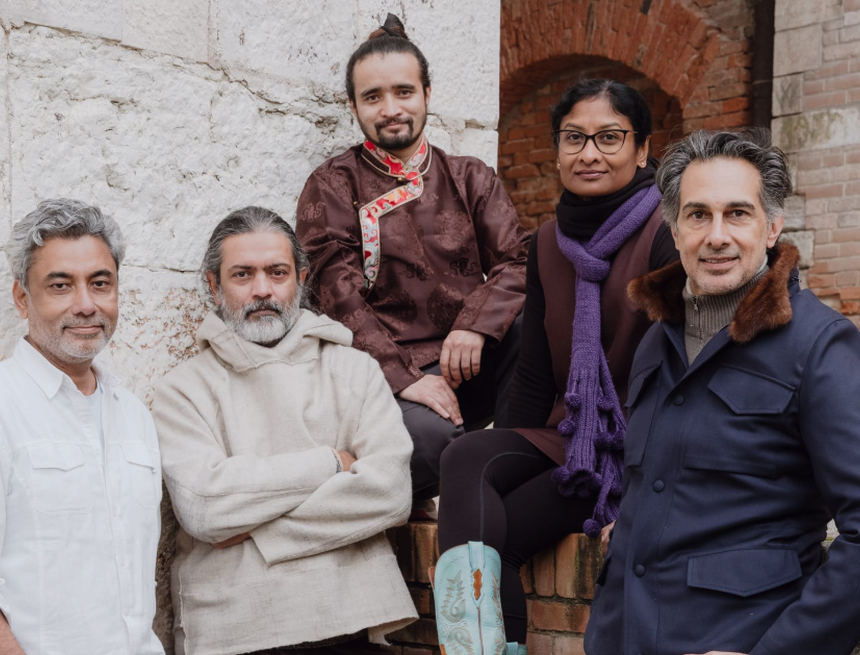
(Photo Credit: Joe Habben: Amin Jaffer, Alwar Balasubramaniam, Asim Waqif, Skarma Sonam Tashi and Ranjani Shettar )
Leave a Reply