From Power Corridors to Civilisational Galleries
Inside India’s Yuge Yugeen Bharat Vision and Digital Heritage Pact
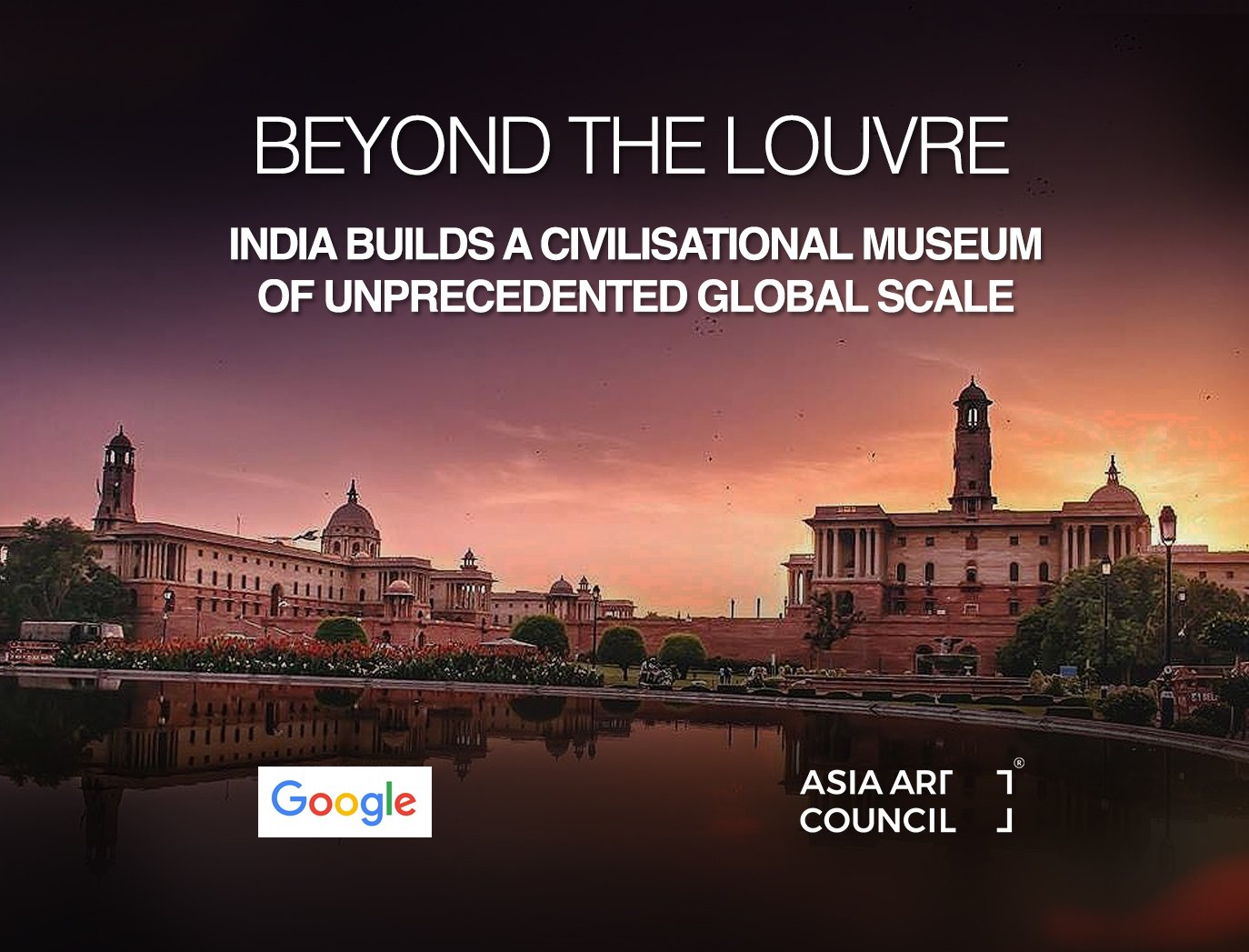
For nearly a century, the monumental sandstone buildings of New Delhi’s North and South Blocks stood as the nerve centre of India’s administrative life. From the inauguration of South Block nearly 95 years ago until February 13, 2026, these corridors housed key government offices, including the Prime Minister’s Office since Independence, and witnessed Cabinet meetings under 16 Prime Ministers. Following the relocation of government offices to Seva Teerth—the new Prime Minister’s Office—and the Kartavya Bhavans, one of the most ambitious cultural transformations in independent India is underway.
Under the stewardship of the Ministry of Culture, the historic North and South Block Complex is being reimagined through adaptive reuse as the Yuge Yugeen Bharat Museum. First announced by Prime Minister Narendra Modi on May 18, 2023, the landmark national project received formal approval from the Cabinet Committee on Economic Affairs on November 11, 2026, at an estimated project cost of ₹3,230 crore. Paired with a landmark Memorandum of Understanding signed between the Ministry of Culture and Google Arts & Culture on November 5, 2026, the initiative signals a dual commitment: building a physical museum of global scale while creating an open, multilingual digital archive that brings India’s 5,000-year civilisational journey to audiences everywhere.
Turning Seats of Governance into Public Cultural Spaces
At the heart of the Yuge Yugeen Bharat vision is a deliberate architectural philosophy—transforming symbols of state power into a “museum of the people” without erasing their historical soul. Rather than demolishing or drastically altering the North and South Blocks, the redevelopment relies on adaptive reuse and minimal intervention to safeguard the buildings’ historic character, iconic facades, and architectural integrity.
Inside, spaces once restricted to officials and policymakers are being opened up for public discovery. Existing courtyards, sweeping corridors, and administrative rooms are being sensitively adapted into interconnected galleries and exhibition spaces, creating a unified museum experience. Across the North and South Block Complex, the proposed built-up area spans approximately 1,78,509 square metres, with sustainable resource use and universal accessibility woven into the redevelopment blueprint.
For the Indian art and heritage ecosystem, this architectural pivot carries deep resonance. Situated in the ceremonial heart of the capital near Rashtrapati Bhavan, the complex will anchor a vibrant cultural precinct where citizens, students, artists, and international travellers can engage directly with the country’s artistic and intellectual lineage.
A Museum Built on Global Scale
When completed, the Yuge Yugeen Bharat Museum will rank among the largest cultural institutions anywhere in the world in terms of exhibition footprint. The blueprint sets aside more than one lakh square metres of display space—an area designed to exceed the exhibition spaces of the Louvre in Paris (73,000 square metres), the British Museum in London (70,000 square metres), and the State Hermitage Museum in Saint Petersburg (66,800 square metres).
Designing at this scale requires equally thoughtful visitor infrastructure. The museum is planned to accommodate up to 30,000 visitors a day and as many as one crore visitors annually. To keep movement smooth and intuitive across such expansive galleries, planners are incorporating timed entry systems and structured crowd management. Beyond the exhibition halls, the complex will feature public amenities designed to make the museum a welcoming all-day cultural destination, including dedicated children’s zones, performance spaces, food courts, souvenir shops, and universally accessible public areas.
Behind the scenes, the project also addresses one of the most critical needs in Indian museology: long-term object care. Dedicated collection storage and state-of-the-art conservation facilities are integrated into the plan to support the preservation, research, and management of India’s vast material heritage.
Five Millennia of Civilisation—and What Visitors Will See First
Unlike a conventional chronological survey limited to isolated dynasties, the Yuge Yugeen Bharat Museum is conceived as a civilisational museum showcasing the continuity, diversity, and richness of India’s heritage spanning over 5,000 years. Both tangible artefacts and intangible cultural practices will be presented through curated thematic galleries.
Among the core themes identified for the museum are:
Architecture and Cityscapes, tracing urban planning, sacred geometry, and built traditions across eras.
Mathematics and Astronomy, illuminating India’s foundational contributions to scientific inquiry, computation, and celestial observation.
Languages and Scripts, celebrating the evolution of linguistic diversity, epigraphy, and literary traditions.
Faith and Spirituality, exploring philosophical systems, ritual arts, and devotional expressions.
Bharat Connects—Trade and Ideas, mapping centuries of maritime and overland exchange that linked the Indian subcontinent with the wider world.
Because of its monumental scale, the museum is being implemented in phases from FY 2026-27 to FY 2030-31 using a modular approach that allows galleries to open progressively. Coordinated project management, technical oversight, quality assurance, and periodic monitoring will guide the rollout through 2031.
Art lovers will not have to wait until the end of the decade for their first walk through the galleries. The inaugural gallery, curated around the theme of Adornment, is slated to open to the public in the North Block in the latter part of 2027. While the National Museum will continue to operate as an institution in its own right, several iconic treasures will move from the National Museum into this opening showcase. Visitors to the Adornment gallery can expect to encounter the celebrated 4,500-year-old bronze Dancing Girl from Mohenjo-daro, the opulent Jewels of the Nizams of Hyderabad, the Taxila Jewellery Collection, and works from the Gandhara Collection.
Across the broader museum, approximately 18 lakh objects have been identified for potential display. These works are drawn from an unprecedented national network: the National Museum, other museums under the Ministry of Culture, 52 Archaeological Survey of India (ASI) site museums, various state museums, and private collections. Content and collection analysis is currently underway to determine how these holdings will be woven into the museum’s narrative arc.
Bridging Ancient Heritage and Modern Tech with Google Arts & Culture
Even before the first gallery doors open in 2027, the public will be able to step inside the project digitally. On November 5, 2026, the Ministry of Culture signed a Memorandum of Understanding with Google Arts & Culture at a virtual ceremony attended by Union Culture Secretary Vivek Aggarwal and Google Arts & Culture Vice President and Founder Amit Sood.
Building on Google Arts & Culture’s 15-year association with Indian cultural institutions—including previous collaborations with the ASI, the National Museum, and the National Gallery of Modern Art—the new partnership places the Yuge Yugeen Bharat Museum at its centre. Under the agreement, Google Arts & Culture will create a lasting digital record of both the historic North and South Block buildings and the wealth of artefacts slated to be housed within them. This digital documentation will give citizens, students, and global audiences an early window into the museum as it takes shape.
Crucially, the MoU extends far beyond the walls of New Delhi. It encompasses a whole-of-ministry sweep across India’s cultural landscape:
Monuments and Archaeological Sites: Digital documentation of monuments, sites, and collections protected by the Archaeological Survey of India.
National Museum Holdings: Wider online access to collections preserved across national museums.
Gyan Bharatam Manuscripts: Integration of India’s manuscript heritage documented under Gyan Bharatam, the national initiative dedicated to surveying, conserving, and digitising manuscripts held in institutions and private collections nationwide.
Living Traditions and Crafts: Documentation of traditional crafts, performing arts, and living cultural practices sustained by institutions under the Ministry of Culture.
Accessibility sits at the core of this digital push. The partnership aims to make these cultural collections discoverable across digital devices and in Indian languages, breaking down geographic and linguistic barriers. Inside the physical museum as well, contemporary technologies—including Augmented Reality (AR), Virtual Reality (VR), Artificial Intelligence (AI), and intelligent building systems—will power interactive storytelling and visitor interpretation.
As Culture Secretary Vivek Aggarwal noted at the signing, India’s cultural heritage is a living inheritance belonging to every citizen while speaking to the entire world. Amit Sood echoed that vision, highlighting the opportunity to bridge millennia of Indian storytelling and artistic mastery with modern digital accessibility so collections remain freely discoverable to educate and inspire curious minds everywhere.
Strengthening the Creative Economy and Cultural Ecosystem
For artists, artisans, researchers, and cultural practitioners across India, the Yuge Yugeen Bharat Museum and its accompanying digital ecosystem represent much more than an exhibition venue. Throughout both its construction and operational phases, the project is projected to generate significant direct and indirect employment across museology, conservation, academic research, design, performing arts, hospitality, and tourism.
Aligned with the Make in India initiative, the museum’s development also emphasizes structured vendor development to encourage the domestic manufacture of world-class museum materials, exhibition infrastructure, and conservation products. This creates direct avenues for Indian craftspeople, conservation specialists, designers, and technology providers to contribute to a landmark national institution. Alongside recurring revenues from ticketing, guided tours, venue rentals, digital experiences, retail, and hospitality, the museum is designed for long-term institutional sustainability.
Together, the physical transformation of the North and South Blocks and the digital archiving alliance with Google Arts & Culture mark a defining moment for India’s cultural sector. By uniting architectural conservation, scholarly curation, living crafts, and accessible digital tools, the Yuge Yugeen Bharat vision offers a blueprint for how a centuries-old civilisation can preserve its past while inviting the world to experience it anew.
Leave a Reply