
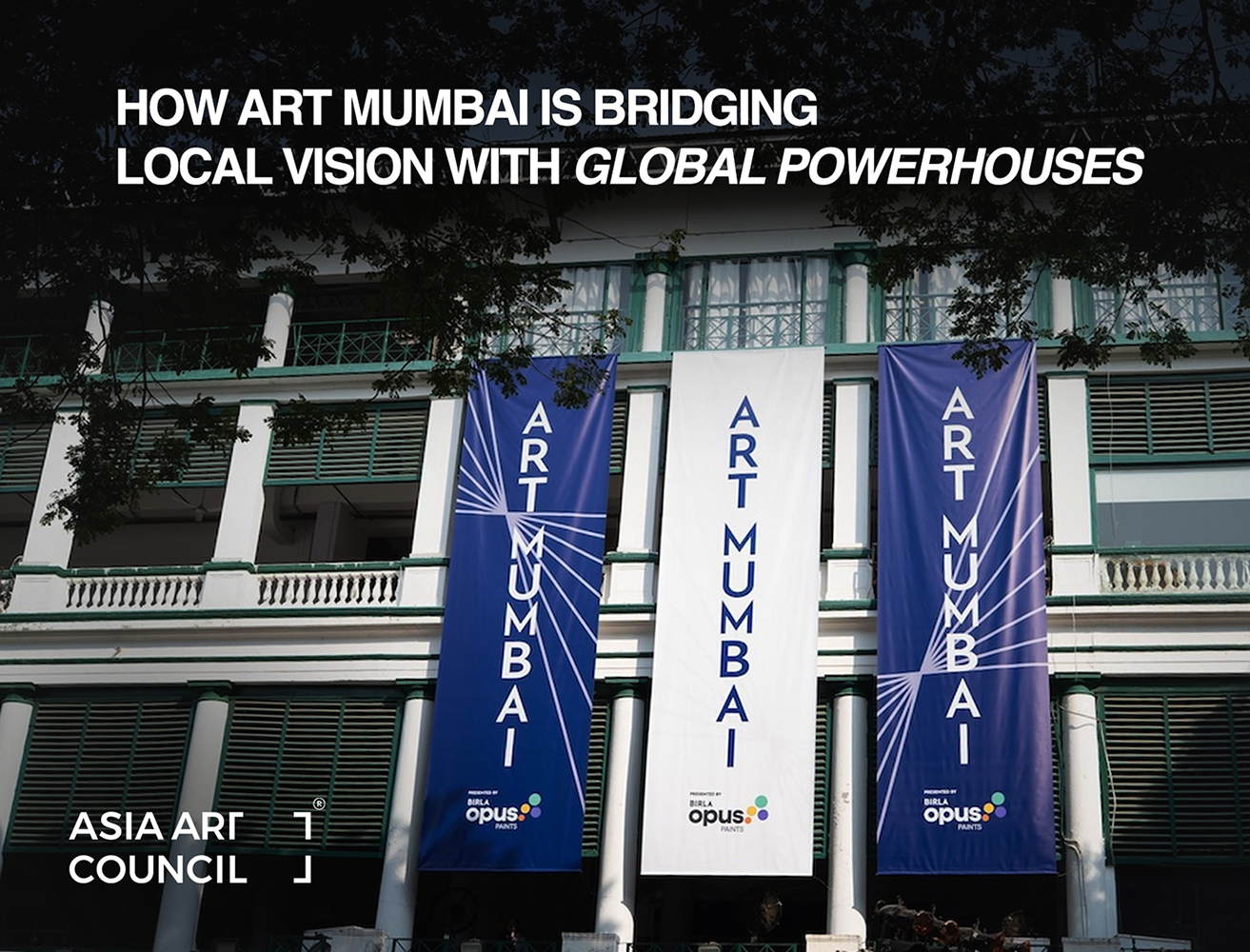
To understand the trajectory of modern and contemporary art in South Asia today, one must look toward India’s western coast. In just a few short years since its inception, Art Mumbai has evolved far beyond an annual marketplace; it has positioned itself as a critical linchpin in the artistic and geopolitical realignment of the Asian art world.
As the fair prepares for its landmark fourth edition at the Mahalaxmi Racecourse, it is worth examining why Art Mumbai has become so pivotal not just to India, but to the broader Asian and international art matrix.
Rewriting the Global Axis: Bringing the World to South Asia
For decades, South Asian art largely relied on Western institutions or diaspora networks to gain global validation. Art Mumbai has radically upended this dynamic. By securing the debut participation of heavyweight international galleries such as Perrotin, Richard Saltoun, and Night Gallery alongside established global pillars like Lisson Gallery and Galleria Continua, the fair acts as a two-way cultural bridge.
It tells the international art community a definitive truth: South Asia is not merely a region to extract talent from, but a thriving, primary destination for acquisition, patronage, and discourse. Global blue-chip galleries are no longer just watching Mumbai from afar; they are boots-on-the-ground, eager to integrate into a sophisticated, maturing domestic market.
Mumbai: The Natural Capital for Creative Exchange
Geography and history meet seamlessly in Mumbai. As India’s historic commercial, financial, and entertainment capital, the city has long harbored a distinct cosmopolitan energy. While other regions host phenomenal cultural gatherings, Mumbai provides a unique synthesis of generational wealth, philanthropic vision, and a robust legacy of private collecting.
Art Mumbai harnesses this metropolitan pulse, creating a confluence where elite private patrons, corporate foundations (such as KNMA and Saffronart Foundation), and international curators converge. It acts as the financial and social heartbeat where capital meets uncompromised creative vision.
Maturing the Domestic Collector Base
A healthy art ecosystem relies on generational continuity, cultivating both seasoned connoisseurs and brand-new patrons. Art Mumbai’s deliberate focus on education, accessibility, and high-level programming (through its renowned Speaker Series, immersive sculpture walks, and curated walkthroughs) demystifies art acquisition.
By welcoming diverse tiers of buyers from first-time young collectors to institutional titans—the fair expands the local baseline of support. This growing confidence ensures that Indian and South Asian contemporary artists enjoy sustainable, independent trajectories rather than speculative boom-and-bust cycles.
4. Championing the Plurality of South Asian Narratives
Art Mumbai has mastered the art of balancing scale with depth. It honours the foundational titans of 20th-century Indian modernism while fearlessly carving out space for cutting-edge contemporary practices, performance art, and large-scale public installations.
By platforming regional galleries alongside international giants, it presents South Asia not as a monolith, but as a diverse, complex mosaic of political, historical, and material expressions.
A Defining Force for the Future
Ultimately, Art Mumbai is pivotal because it captures a historic shift: the center of gravity in the art world is multiplying. By anchoring Mumbai firmly on the global cultural map, Art Mumbai proves that the future of contemporary art is deeply global, fiercely local, and profoundly interconnected. As collections take shape on the racecourse grounds each November, they aren’t just reflecting the market of today, they are actively drafting the art history of tomorrow.
Leave a Reply