AAC: What drove you to launch Hypha Studios, how has your background in contemporary art shaped your focus on creative infrastructure, and what new market model are you most energized by today?
Camilla Cole: I founded Hypha Studios in 2021, really in response to something that seemed completely absurd to me: cities full of empty commercial buildings at exactly the same time that artists were being priced out of space.
My background is in contemporary art and curating, but over the last five years I’ve become increasingly interested in the infrastructure around art, who gets space, who gets seen, who gets paid, and who actually gets to participate.
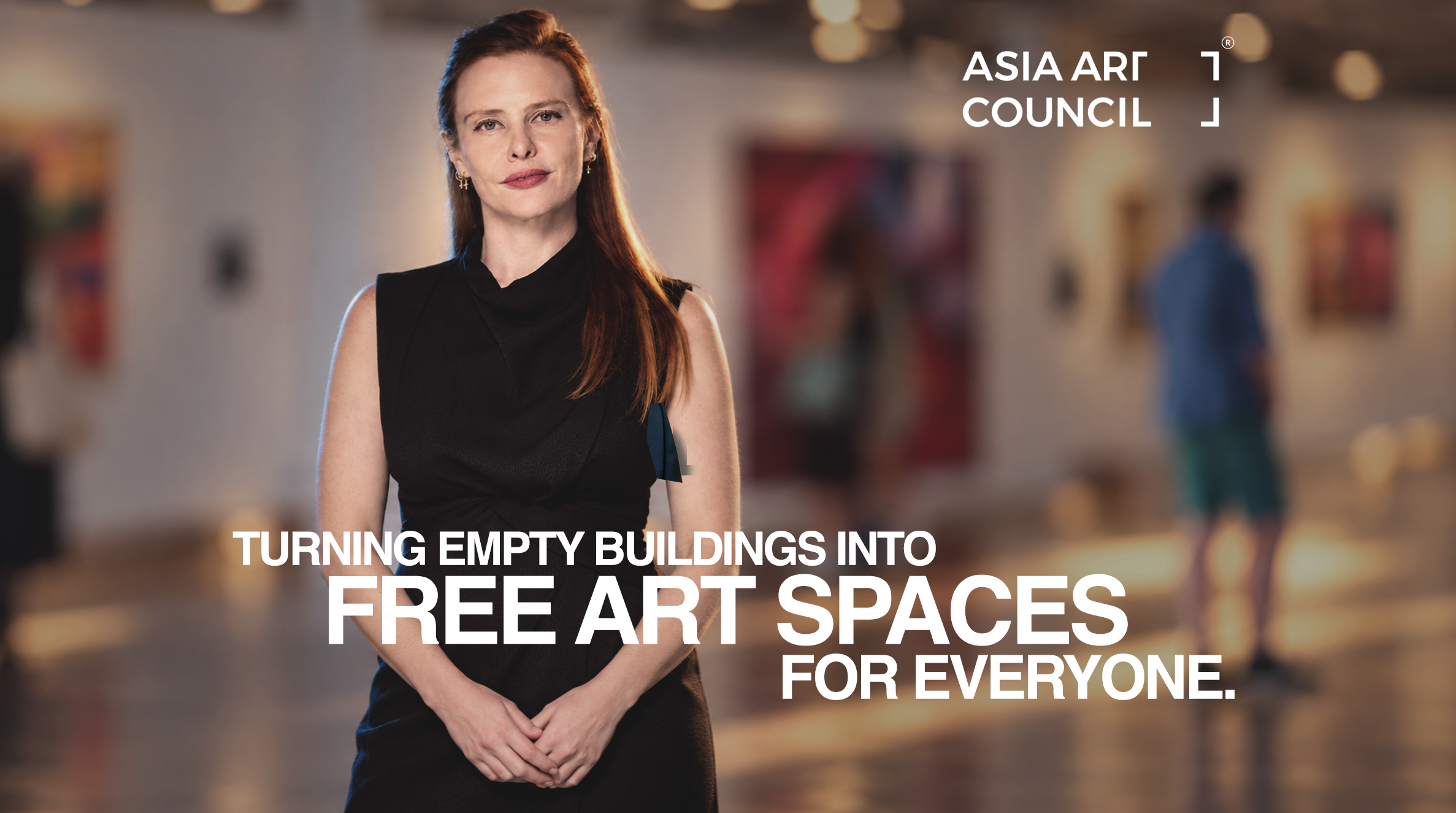
Hypha works with landlords to take vacant commercial property and give it to artists for free, turning it into studios, exhibitions and public programmes. We’ve now worked across more than 70 locations, supported thousands of artists and put millions of pounds’ worth of otherwise empty space back into cultural use.
What excites me now is working out what comes next. Space is one part of the problem, but artists also need audiences, collectors and sustainable careers. That’s why we’ve launched Hypha Curates, which connects people directly with artists and their work. I’m interested in whether we can build a model where supporting artists isn’t simply philanthropic — it can also create a functioning market around them.
AAC: Looking at the art scene in Asia today, how would you describe its current energy and momentum? What big shifts have you noticed over the last few years from where you stand?
Camilla Cole: I’m probably slightly cautious about talking about “the Asian art scene” as though it is one thing. Hong Kong, India, Dubai, Seoul, Singapore, Tokyo, Bangkok and Shanghai all have very different ecosystems, histories and audiences.
What does seem clear from where I sit is that the old idea of the contemporary art world having one or two centres is becoming less relevant. Artists and collectors are much more international, information travels incredibly quickly, and younger collectors in particular don’t necessarily need validation from London or New York before becoming interested in an artist.
That shift is exciting. I think it creates an opportunity for much more direct relationships between artists and audiences internationally, rather than everything having to pass through the same traditional gatekeepers.
AAC: Every expanding market hits a few speed bumps along the way. What do you feel are the biggest bottlenecks
or challenges holding the Asian art ecosystem back right now, and how do we solve them?
Camilla Cole: I’m not sure the biggest problems are uniquely Asian. A lot of them are structural problems within the art world generally.
Artists need affordable space to make work. Galleries have enormous overheads. Collectors often find the art world intimidating or opaque. Meanwhile, huge amounts of commercial space sit empty in major cities. There is something fundamentally inefficient about that.
I also think we need to get better at supporting artists in the space between emerging and established. There is a huge amount of attention around discovering new talent, but what happens three or five years later? How does somebody actually build a sustainable career?
For me, the answer is partly about creating better infrastructure: affordable or free space, opportunities to exhibit, access to collectors, and routes to selling work which don’t require artists to give away an unsustainable proportion of their income.
AAC: If you had a magic wand to reshape the industry, what concrete steps or bold strategies should we take to make art more accessible, financially viable, and sustainable for everyone involved?
Camilla Cole: I’d start with property.
There is an extraordinary amount of vacant commercial space in cities around the world, and at the same time artists are leaving those cities because they can’t afford to work there. We’ve spent five years proving that those two problems can help solve each other.
I’d also make buying art much less intimidating. There is still a strange assumption that you need to know a lot about art before you are allowed to collect it. You don’t. You need to look, be curious, ask questions and work out what you respond to.
And I’d like more of the money generated by the art world to reach artists. That sounds obvious, but it still isn’t always how the system works.
AAC: It takes a village to build a thriving creative scene. What role do you think we all play, whether as collectors, advisors, galleries, or institutions in actively nurturing and growing the Asian art community?
Camilla Cole: I think everyone can be much more practical about this.
If you own property, give artists space. If you run an institution, create opportunities for artists who aren’t already represented everywhere.
If you advise collectors, introduce them to artists they haven’t heard of rather than continually reinforcing the same names. And if you’re a collector, actually buy work.
That last point matters. We sometimes talk about “supporting artists” in quite abstract terms, but buying a £500 or £1,000 work directly affects an artist’s ability to continue making work.
I’m interested in making that relationship much clearer. Collecting can be enjoyable and personal, but it is also one of the most direct ways of supporting an artist’s career.
AAC: The new generation of collectors seems to be rewriting the rules. How are you seeing younger buyers approach art differently compared to the traditional collector base?
Camilla Cole: They seem much less interested in asking permission.
People discover artists through Instagram, online art platforms, exhibitions, friends, studio visits and increasingly through all sorts of routes that sit outside the traditional gallery structure. They are also more comfortable buying online and talking directly to artists.
I think that is healthy. The traditional art world can make collecting feel unnecessarily complicated as though you need a certain level of knowledge, wealth or access before you can begin.
I’d much rather someone bought one piece they absolutely loved for £500 than felt they had to wait until they could afford something that the art world had told them was important.
AAC: The art world moves fast and can be unpredictable. What keeps you grounded, and where do you look for inspiration when you need to recharge?
Camilla Cole: I’m not particularly good at switching off! I’m naturally curious and I tend to get energy from ideas, conversations and seeing something that makes me think differently.
Having a baby this year has probably changed my relationship with time more than anything else. It forces a bit of perspective.
There is only so much time in the day, so I’m becoming much clearer about what is actually worth doing and what isn’t.
And I still get most excited by seeing what artists can do in free space – whether it’s an innovative exhibition or an incredible event for people to come to. I also love seeing an artist doing something I haven’t seen before. There is a lot of noise around contemporary art, but occasionally you walk into a studio or exhibition and something just stops you. That’s still the thing that keeps me interested.
Leave a Reply