
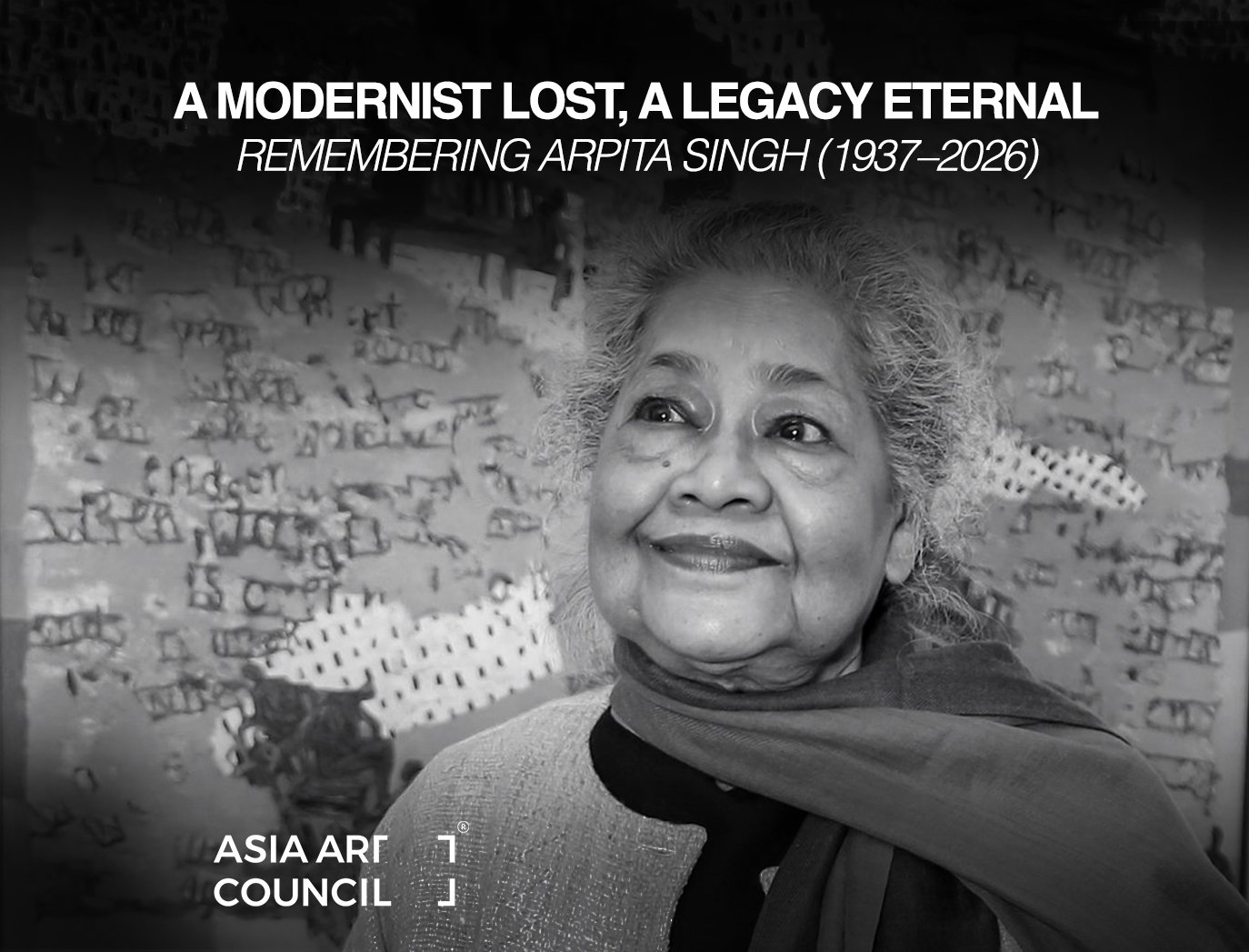
Weaving Time, Memory, and Grace: Remembering Arpita Singh (1937–2026)
The Indian art world has lost one of its most luminous and cherished matriarchs. Arpita Singh, a towering figure of modern Indian art whose densely populated canvases mapped the political landscapes, quiet griefs, and vibrant inner lives of women, passed away in New Delhi at the age of 89.
While her departure marks the end of an era, her extraordinary canvases, brimming with secret symbols, floating figures, and a poetic, dreamlike gravity—remain deeply woven into the cultural fabric of modern history.
A Canvas Forged in History and Wonder
Born in Baranagar, Bengal, in 1937, Singh’s early life was framed by profound historic shifts. As a young child, she witnessed the tumultuous backdrop of the Indian independence movement and the scars of the 1947 Partition—experiences that quietly ingrained in her a lifelong sensitivity to displacement, vulnerability, and resilience.
After graduating from the Delhi Polytechnic with a Diploma in Fine Arts in 1959, and a formative stint with the Cottage Industries Restoration Program where she engaged closely with traditional Indian weavers and craftspeople, Singh carved a completely distinct path. Long before figuration became a trendy academic exercise, she embraced a visual language deeply informed by folk traditions, miniature painting aesthetics, and the linear rhythm of traditional kantha embroidery.
Her works often dominated by characteristic palettes of tender pinks, blues, and earthy warmth were never mere documentation. Instead, they functioned as psychological maps. Whether painting iconic recurring characters like Munna Apa, subverting mythological archetypes in works like Devi Pistol Wali, or capturing the poignant quietude of everyday domestic spaces, Singh treated the ordinary world as an arena of immense emotional and political weight.
A Formidable Force of Grace and Mentorship
To know Arpita Singh was to encounter a quiet, fierce powerhouse. Standing tall in spirit despite a diminutive frame, she was a beloved mentor, friend, and pillar of inspiration to generations of artists. Her life was anchored by her partnership with her husband, fellow artist Paramjit Singh, though it also bore profound sorrows—most notably the loss of their artist daughter, Anjum Singh, in 2020.
Through every season of change, Singh kept painting. Her late-career resurgence brought well-deserved global acclaim, including major retrospectives at New Delhi’s Kiran Nadar Museum of Art, features in international institutions like the Centre Pompidou and the Guggenheim Bilbao, her landmark institutional solo exhibition Remembering at London’s Serpentine Galleries, and her ongoing exhibition Unfolding at New York’s Talwar Gallery. In 2011, the nation honored her contributions with the Padma Bhushan.
An Ever-Present Legacy
As poet Ashok Vajpeyi fittingly reflected upon her passing, “Her art survives her life and would now create a new posthumous life of itself.”
Arpita Singh taught us how to look closer at the world—to notice the fragile clay birds resting beside tigers, the weapons of protection hidden inside ordinary hands, and the quiet dignity of women holding up the universe from their kitchen tables. Though she has left her earthly studio, her vibrant, storytelling strokes will continue to breathe, wonder, and watch over us for generations to come.
Leave a Reply