
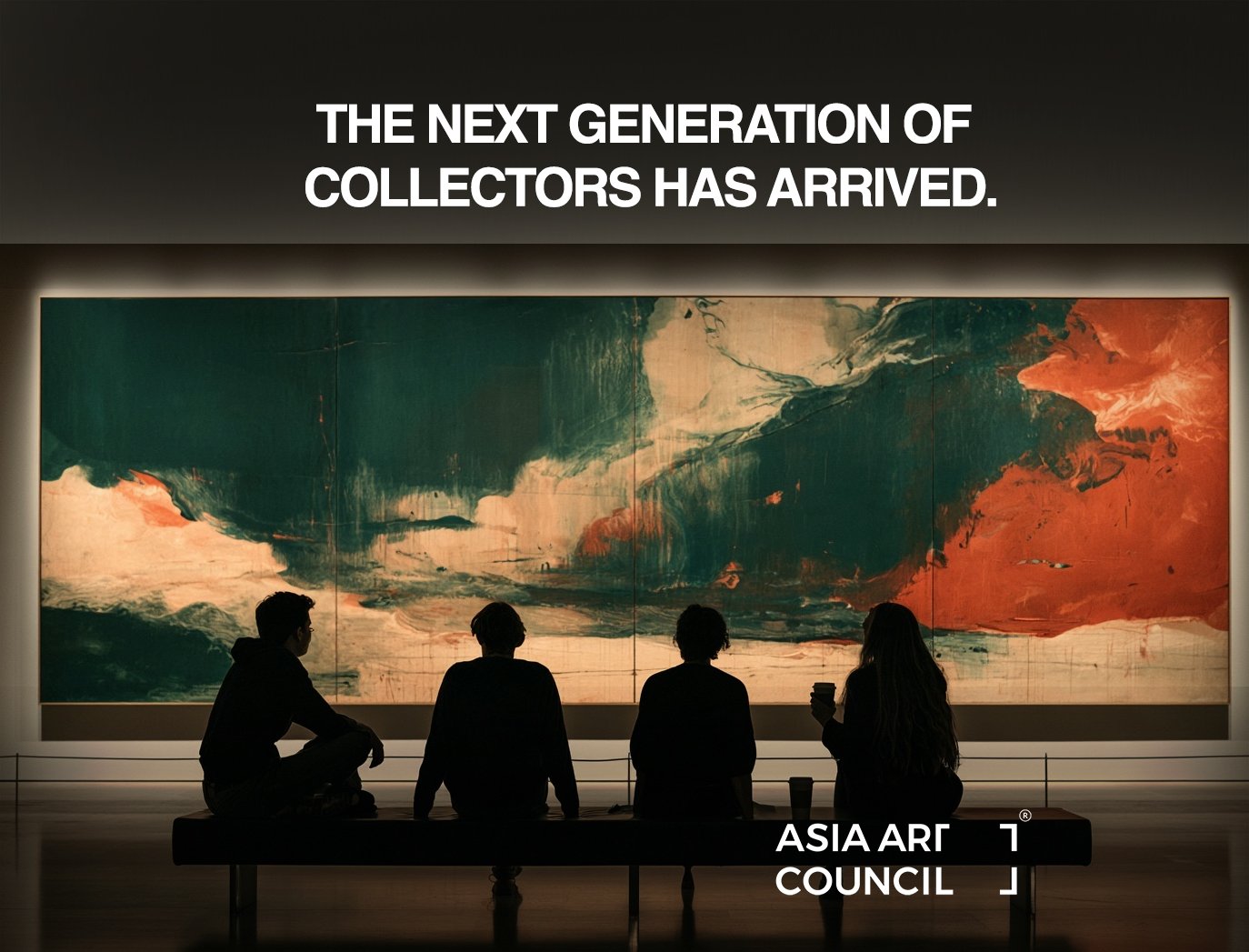
The Velvet Rope Is Moving: Who Gets Into Art’s Inner Circle Now
Walk into the VIP preview of any major fair today and the room looks different from a decade ago. The silver-haired patriarch with decades of collecting behind him is still there, but he is no longer the one setting the pace. The latest Art Basel and UBS Survey of Global Collecting, produced by Arts Economics, puts numbers on what dealers have been sensing for a while: the biggest checks are now coming from collectors in their twenties.
The gap is not small
Wealthy Gen Z respondents averaged roughly $347,000 on art, about 19% more than the year before. The average across all high-net-worth collectors in 2025 was about $124,000. Put plainly, the youngest buyers in the sample are spending nearly three times the norm, and they account for close to half of everyone who bought a work above $1 million in 2026.
Two cautions before we crown a new generation. The sample is high-net-worth people only, so this describes the very top of the market, not twenty-somethings in general. And averages flatter the story when a handful of very large purchases sit inside a small group. Treat it as a signal about where serious money is heading, not as a census.
New money is displacing old habits
The detail I find most telling has little to do with age. Among collectors spending between $1 million and $10 million in early 2026, about one in five had been collecting for five years or less. Only 4% came from the segment that has been buying for over two decades. The established guard is no longer the engine of the upper market; people who started recently are.
Art Basel’s chief, Noah Horowitz, describes the new VIP crowd as younger, more female and more self-made than before, and says that once they commit, they commit heavily. That matches what I hear from gallerists: these clients arrive with their own wealth, their own opinions, and no obligation to follow an older collector’s taste.
The market has long assumed that heirs would sell off their parents’ collections. The data suggests otherwise. Almost 90% of Gen Z respondents who inherited art still own it, compared with 64% of Gen X. If that holds, it eases a worry that has hung over estates and auction houses, and it hints that the generation now buying also sees itself as a steward of what came before.
Women are widening the field
Men still dominate the top price bands: 13% bought works above $100,000, against 7% of women. But women collect across more categories, including painting, photography, digital work and emerging artists. That breadth matters. Collectors who buy widely tend to discover and back artists earlier, which is how careers get made.
It is not only about paintings
Gen Z also leads in other collectibles, and the biggest gap is jewelry and gems, where average spending was about $151,000, more than five times the next cohort. Sports memorabilia, wine, spirits and collectible sneakers show similar leads. A gallery that thinks it competes only with other galleries is mistaken. It competes for the same pool of “things worth owning” as the auction of a rare watch.
Reading it from Asia
Asia has always had wealth that moves through families, so a rising generation of heirs and founders feels less like a shock here than in Europe or the US. Hong Kong and Singapore, built as art hubs, are well placed to serve this crowd. The pressure point is trust: young buyers who research heavily will not accept opaque pricing or thin documentation.
India shows the same pattern in an earlier form. The market is rooted in the modernists, whose prices keep climbing, including Husain’s record-setting result in New York in 2025. A younger, self-made group is now appearing at fairs and gallery openings in Mumbai and Delhi. If Indian dealers want this client, they will need to offer proper advisory support, transparent records and a stronger platform for living artists, not only for the established masters.
The outlook is upbeat. Collectors surveyed across every time horizon mostly expect the market to grow, and after nearly three years of decline, total sales rose 4% to $59.6 billion in 2025. Fresh buyers are a large part of that recovery.
Still, a recovery built on a thin layer of very rich newcomers is only as stable as their confidence. The real measure will be what they buy next: whether they back emerging artists and independent spaces, or simply pile into names that already feel safe. If they choose well, this generation will be remembered for more than the size of its checks.
Leave a Reply