
From Art Mumbai to major acquisitions, a global museum’s India visit signals a new era for South Asian contemporary art.
The art world doesn’t announce its shifts with press releases.
It does it quietly through museum visits, acquisitions, and who chooses to show up where.
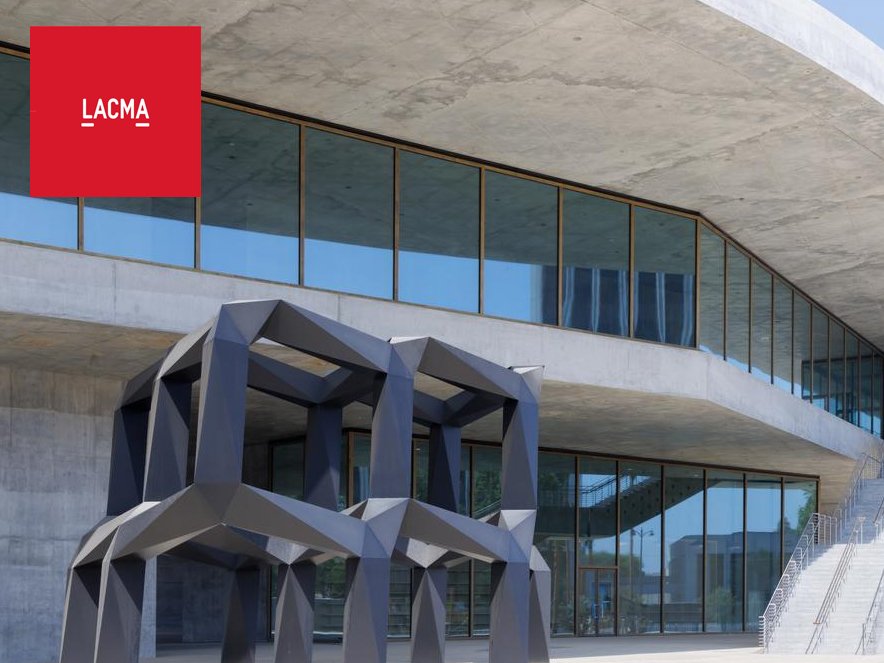
So when the Los Angeles County Museum of Art (LACMA) landed in Mumbai during Art Mumbai 2025, it wasn’t simply a calendar coincidence. It was a cultural signal which is sharp, deliberate, and impossible to ignore.
Because institutions like LACMA don’t travel for tourism.
They travel for history in the making.
And this time, the destination was India.\
India Is No Longer Emerging. It’s Establishing.
The Indian art market has been gathering momentum for years. But 2025 wasn’t just growth—it was arrival.
Across global auctions and South Asian sale rooms, the numbers didn’t just impress. They declared legitimacy.
- M.F. Husain’s Gram Yatra reportedly sold at Christie’s for ₹118 crore, rewriting the record books for modern Indian art.
- V.S. Gaitonde’s Untitled (1970) reached ₹67.08 crore, reaffirming the artist’s global blue-chip stature.
- Saffronart’s milestone 25th anniversary evening sale recorded ₹355.77 crore, a reported high point for South Asian auctions globally.
- Tyeb Mehta’s Trussed Bull (1956) hit ₹61.8 crore, a career-high in the artist’s centenary year.
These aren’t just financial achievements. They’re cultural confirmations.
The message is clear: Indian modernism is not peripheral anymore. It’s central.
And with the market’s maturity, the spotlight naturally moves beyond the past—towards the present.
Art Mumbai: Where the Global Gaze Now Pauses
Still young, still evolving, Art Mumbai has already begun to behave like a major global fair: curated, concentrated, and most importantly—serious.
In just three years, it has positioned itself as a formidable stop on the cultural calendar, becoming a space where South Asian and international art can sit in the same room and speak the same language.
That is exactly what global institutions listen for. Not noise—clarity.
And during the Art Mumbai weekend, LACMA’s official visit brought the kind of validation that reshapes a region’s art narrative overnight.
Two announcements stood out, both carrying long-term significance:
1) Bharti Kher at LACMA in 2027
Bharti Kher is set to receive a solo show in 2027—reportedly making her the first living Indian artist to be given a solo exhibition at the museum. It’s not just another exhibition slot. It’s a placement inside one of the world’s most influential cultural institutions.
A museum show doesn’t merely present an artist.
It historicises them.
2) LACMA acquires Bhasha Chakrabarti
LACMA also announced the acquisition of:
Bhasha Chakrabarti’s
Self-Portrait as Mumtaz Mahal on a Carpet from the Shah Jahan Period at the Frick (Untimely Death) (2023)
And crucially—it will be displayed at the museum, entering the museum’s long-term storytelling.
In museum language, acquisition means one thing:
the future has already chosen what it wants to remember.
LAADI: The New Cultural Architecture of Belonging
LACMA’s India visit didn’t exist in isolation.
It was tied to a wider vision: LACMA’s Asia and Asian Diaspora Initiative (LAADI).
Los Angeles holds one of the largest Asian-American populations, with a significant South Asian diaspora.
LAADI acknowledges that reality—not as demographic trivia, but as cultural power.
LAADI is less a programme and more a strategy:
a framework to ensure Asian and Asian diasporic art becomes integral to the museum’s collecting, programming, and community identity.
This is the modern museum in motion:
not only collecting objects, but building ecosystems.
Why Chakrabarti’s Work Matters (Beyond the Canvas)
The choice of Bhasha Chakrabarti’s painting is telling—not only because it is visually compelling, but because it is intellectually disruptive. Curators have noted that the work challenges an old Western hierarchy museums have long reinforced:
European “fine art” vs Asian “craft”
Even the material is political.
Chakrabarti paints on burlap—a surface tied to carpet-making traditions, but also capable of carrying the weight of classical oil painting. It becomes both medium and message: a critique of categorisation itself.
This is the kind of contemporary work global institutions are increasingly drawn to:
art that doesn’t just decorate history, but questions the architecture of history-making.
Mumbai and Los Angeles: Two Cities That Understand Fame and Form
There’s a poetic symmetry in the Mumbai–LA connection.
Both cities thrive on:
- creativity
- spectacle
- storytelling
- cultural influence
- entertainment as a global export
From Hollywood to Bollywood, these are cities that do more than produce content—they produce culture.
In that sense, LACMA’s presence in Mumbai feels almost inevitable:
a conversation between two creative capitals that know what it means to shape taste at scale.
And now, art becomes the newest bridge.
This Is a Turning Point
The most important part of this story isn’t the glamour of a museum delegation or the headline power of record-breaking auctions.
It’s the shift underneath it all:
✅ Indian art is being collected as legacy, not trend
✅ South Asian artists are entering permanent global narratives
✅ Art fairs like Art Mumbai are evolving into acquisition hubs
✅ Diaspora networks are influencing institutional strategy
✅ Museums are building Asia-facing cultural ecosystems—not side projects
This isn’t the world “discovering India.” This is the world repositioning its cultural compass.
Because When Museums Move, History Moves
Markets can rise and fall.
Trends can change overnight.
But museums operate differently.
They don’t chase moments—they preserve meaning.
So when LACMA turns its attention to India, the real headline is not that Indian art is valuable.
Indian and South Asian contemporary art is being written into the world’s permanent cultural memory.
And once that ink dries, it doesn’t fade easily.
Leave a Reply