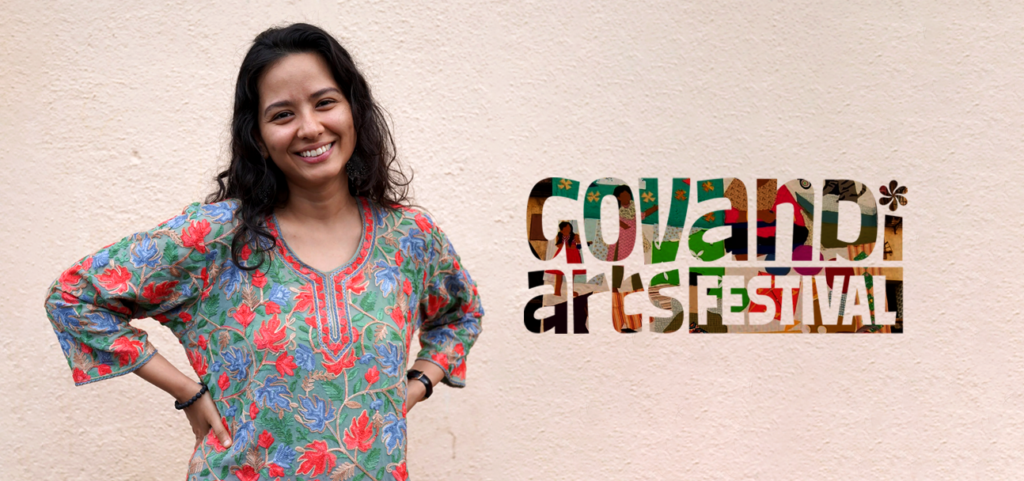
Mumbai: In a city globally celebrated for its colourful cultural identity, one of its most overlooked neighbourhoods is quietly redefining what art means and who gets to make it. The Govandi Arts Festival, founded by cultural practitioner Natasha Sharma, has emerged not just as an art event but as a bold cultural reckoning. It challenges long-standing assumptions about creativity, class, and ownership of artistic spaces.
For too long, the art world, by tradition or by design has remained a carefully guarded ecosystem, accessible mostly to the privileged. Galleries, auction houses, and elite institutions have shaped narratives that often exclude those whose lives contain the most urgent, visceral stories. It is this very divide that Asia Art Council, one of the continent’s fastest-growing art communities, to pose a foundational question:
“What is art, and to whom does art belong?”
The answer, it turns out, was waiting in Govandi, Mumbai.
From India’s Lowest HDI to the Highest Courage
If you think art belongs to the elite, Govandi just proved you wrong.
The neighbourhood has long been synonymous with some of Mumbai’s harshest realities. With a Human Development Index of 0.05, Govandi appears frequently in narratives of urban inequality—crime, chronic infrastructural neglect, sanitation crises, overcrowding, and daily survival struggles. In such a place, art is often dismissed as an unaffordable luxury.
“In a place where survival is the priority, why would creative expression matter?” Natasha Sharma wrote in her widely shared article.
But it was this very question—this quiet, repeated dismissal—that sparked something extraordinary.
Over a hundred young people, women, and transgender artists from Govandi responded not with resignation, but with a movement. A movement anchored in two searing questions: Where is our place? Where is our identity?
A Festival That Refused to Be a Festival
Govandi Arts Festival is not a pop-up event. It is an assertion, a declaration of existence in a city that has long overlooked its margins.
Natasha Sharma and her team didn’t bring art to Govandi. They cultivated, shaped, and amplified the art that already lived there. And in doing so, they dismantled the idea that creativity can only flourish in comfort.
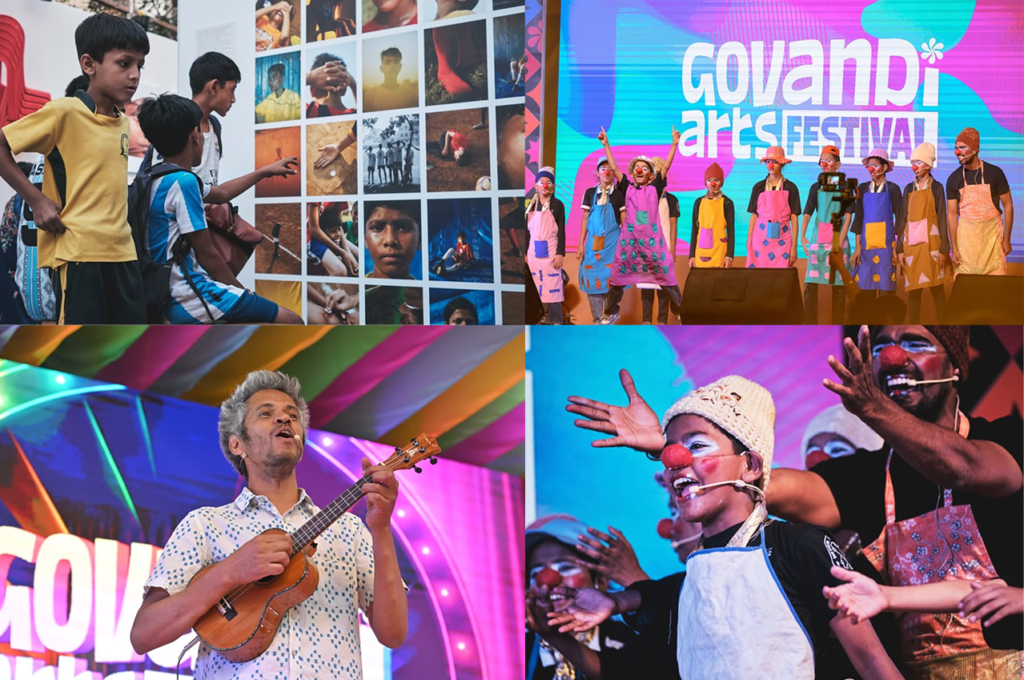
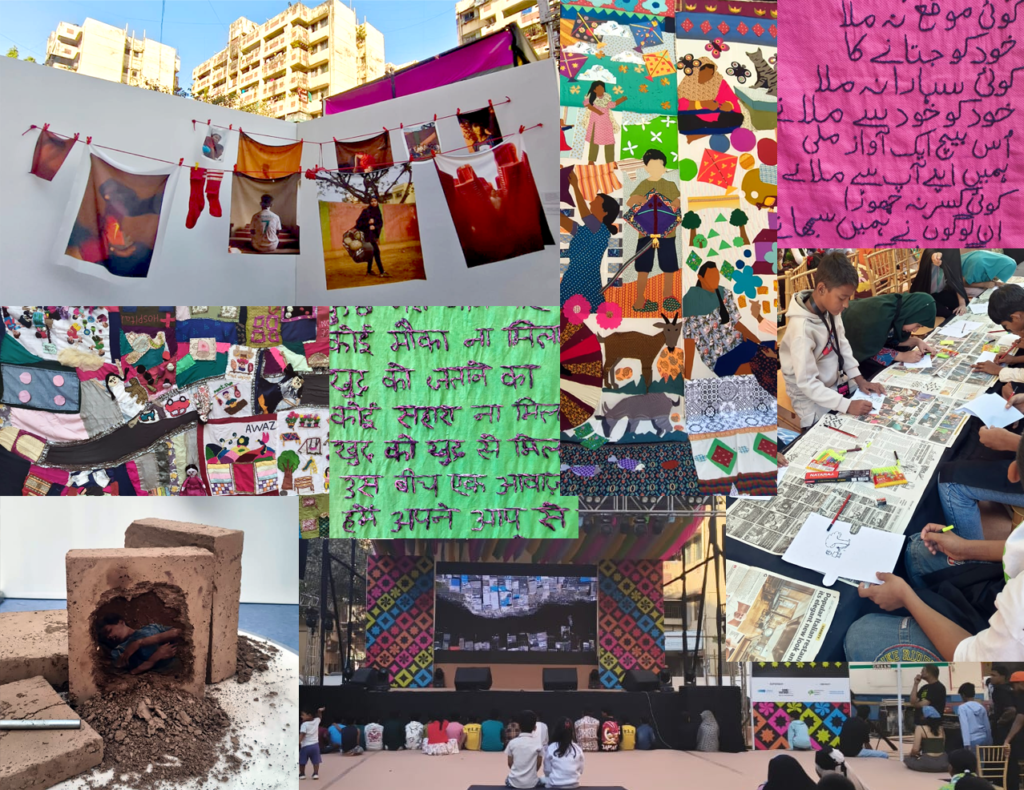
Residents transformed their lived realities into powerful expressions across Murals and paintings, Photography, Installations, Drama, Music etc.
Every piece came from within the community. There were no outside narratives, no curated reinterpretations—only raw truth presented with astonishing clarity.
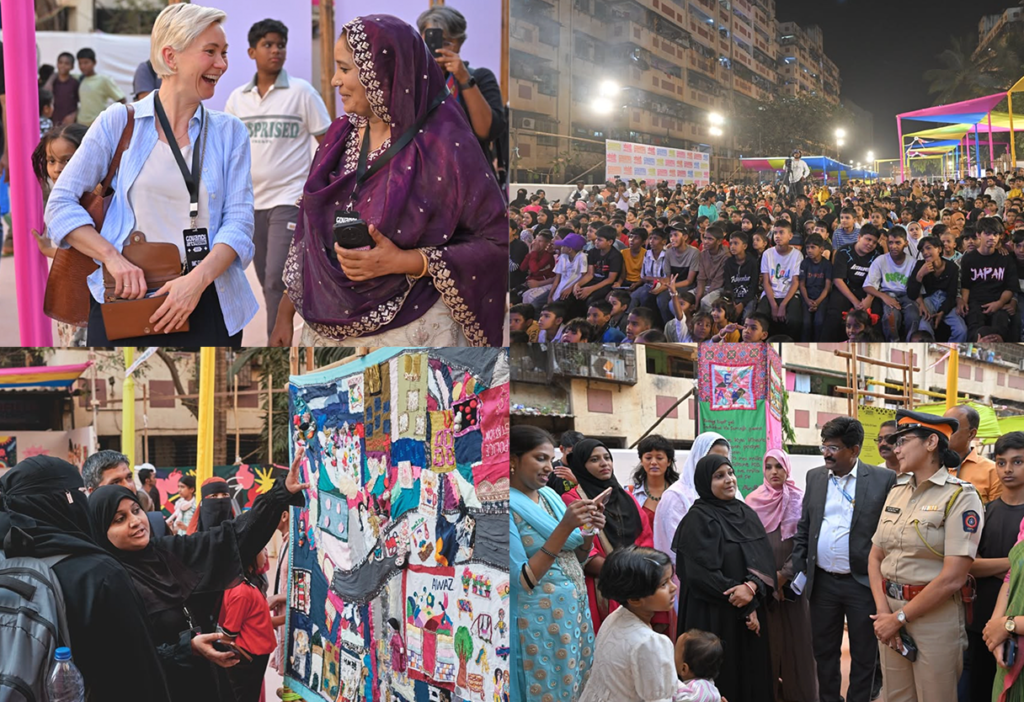
The Founder of the Asia Art Council, who attended the festival, described the experience as profoundly moving:
“What I witnessed in Govandi was a rare artistic energy. Its raw, honest, and hopeful. The twinkling, confident eyes of young artists told a story far greater than their environment. This festival isn’t just important, it’s essential.”
A Blueprint for the Future of Art
Govandi Arts Festival stands as a powerful reminder that the future of the art ecosystem must be inclusive or it risks being irrelevant. By working with the community instead of speaking for them, Natasha Sharma has crafted a model that challenges the geography of privilege embedded within the arts.
In neighbourhoods where opportunities are scarce, access to art is not an indulgence—it is transformative. It builds confidence. It nurtures identity. It offers legitimacy to voices long silenced by circumstance.
A Beacon of Hope in Mumbai’s Cultural Story
As the festival draws another successful edition to a close, its message rings louder than ever: Govandi Arts Festival is not a fleeting moment—it is a movement. A reminder that art doesn’t only grow on white walls under perfect lighting. Sometimes, it grows in narrow alleys where hope is forced to compete with hardship.
Govandi’s youth are no longer waiting for permission.
They are creating.
They are claiming space.
They are reshaping identity, one brushstroke, one lyric, one performance at a time.
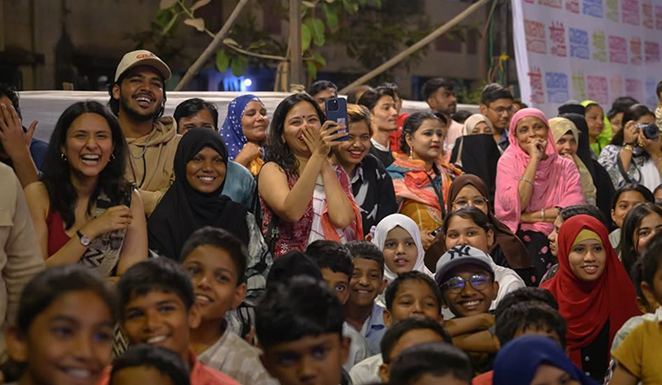
Thanks to Natasha Sharma and her dedicated team, that place at last is here, illuminated at the centre of India’s growing artistic consciousness.
(All images courtesy Govandi Art Festival)
Leave a Reply