
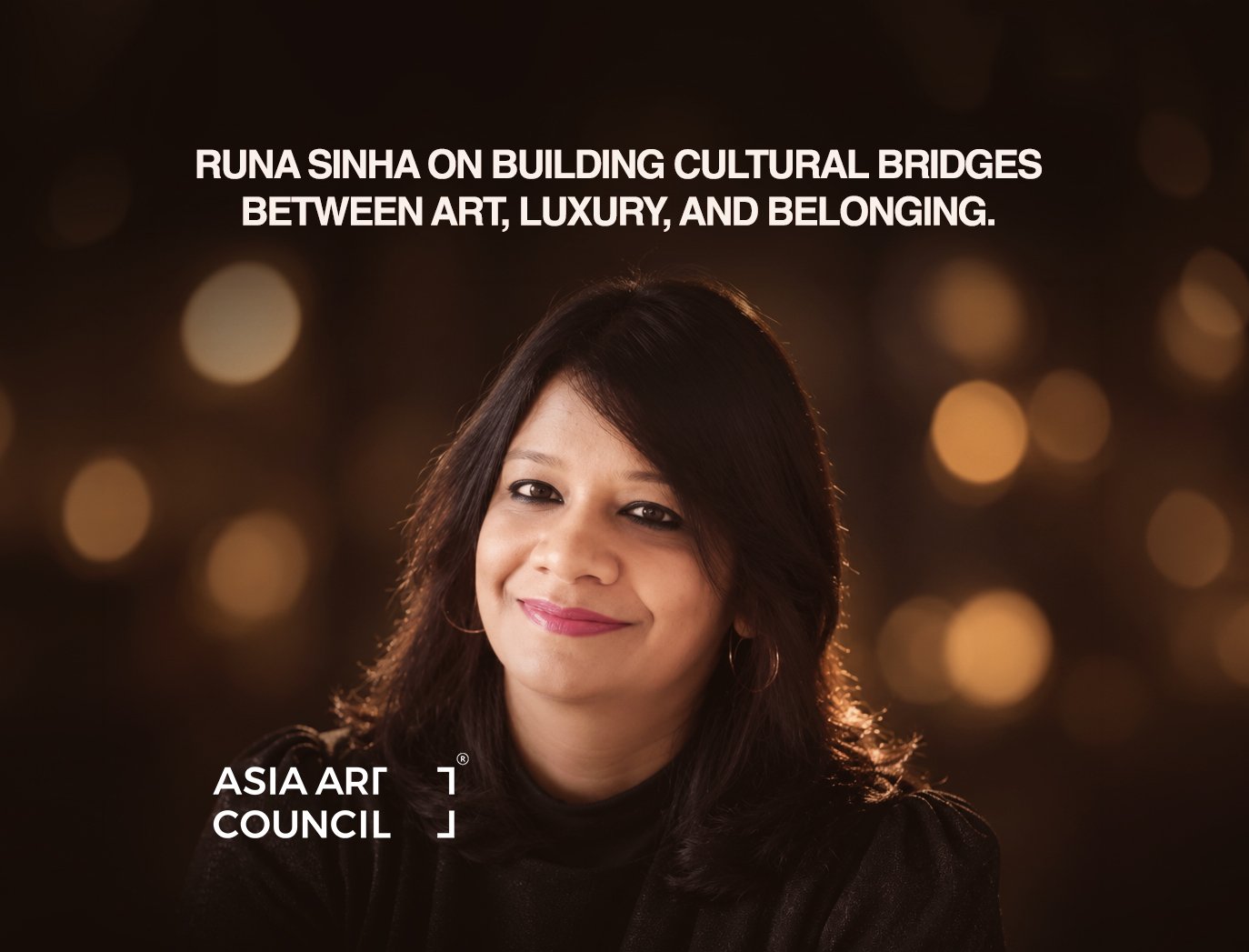
AAC: To start us off, tell us a bit about your journey. What is your background, what’s your primary area of expertise, and what excites you most about what you’re working on right now?
My journey has spanned close to three decades across media, brand solutioning, content, digital, print and experiential marketing. Over the years, I have had the opportunity to build businesses, work with leading brands and create solutions that sit at the intersection of consumer insight, storytelling and business outcomes. I was also part of the team that launched Travel + Leisure India & South Asia, an experience that deepened my understanding of luxury, culture, travel and the aspirations of affluent consumers.
Today, as Co-founder & CEO of White Orange Experiences, my focus is on creating bespoke, high-touch experiences for brands and their HNI/UHNI communities. We look at experiences not simply as events, but as carefully designed moments that can build relationships, create communities and contribute to acquisition, engagement and long-term brand equity.
What excites me most right now is the intersection of luxury, art, culture and community. Through initiatives such as The Wealth Salon, Heritage Maison and our emerging collector-focused experiences, we are exploring how brands can create meaningful cultural conversations rather than simply create visibility. I believe the next opportunity in luxury is not merely to sell access or exclusivity, but to create belonging, discovery and relevance.
AAC: Looking at the art and design scene in Asia today, how would you describe its current energy and momentum? What big shifts have you noticed over the last few years from where you stand?
From where I stand, the energy around art and design in Asia feels increasingly connected to lifestyle, identity and experience. Art is no longer confined to the traditional gallery or institutional environment. It is finding its way into homes, hospitality, retail, luxury brands, architecture, fashion and private communities. This creates an exciting opportunity for a much larger audience to encounter art in more natural and contextual ways.
I also see a shift in the way younger affluent audiences engage with art. There is curiosity around the story, provenance, craft and personality behind a work, rather than simply its perceived status or investment value. For me, one of the most interesting shifts is the emergence of the experience around the artwork. A collector may want to meet the artist, understand the craft, discover the cultural context or engage with other people who share that interest.
AAC: Every expanding market hits a few speed bumps along the way. What do you feel are the biggest bottlenecks or challenges holding the Asian art ecosystem back right now, and how do we solve them?
That is where I see art and experiential design beginning to converge. One challenge is accessibility -not necessarily in terms of price alone, but in terms of language, confidence and context. For someone who is not already part of the art ecosystem, entering it can sometimes feel intimidating. There is a significant opportunity to create more bridges between artists, galleries, collectors, institutions and new audiences.
The second is the need to build stronger communities around art. Transactions are important, but relationships create longevity.
The third is the need to broaden the definition of the collector. There is a new generation that may not initially identify itself as an art collector but is deeply interested in design, craftsmanship, culture, architecture, fashion and provenance. These interests can become natural entry points into collecting.
I believe the solution lies in creating more informal, experiential and contextual pathways into art – salons, studio visits, intimate conversations, curated gatherings, private previews and cross-disciplinary collaborations. The objective should not be to simplify art, but to make the journey towards discovering it more welcoming.
AAC: If you had a magic wand to reshape the industry, what concrete steps or bold strategies should we take to make art more accessible, financially viable, and sustainable for everyone involved?
I would focus on three things: education, community and collaboration.
First, we need more opportunities for people to understand art without feeling that they need to already possess expertise.
Conversations with artists, curators, designers and collectors can make a significant difference.
Second, I would build more bridges between the art ecosystem and adjacent luxury and lifestyle ecosystems. Art has enormous potential to intersect with hospitality, real estate, automobiles, fashion, jewellery, travel and wealth management – provided these collaborations retain cultural integrity.
Third, I would encourage more sustainable models for artists and creative practitioners. The ecosystem needs multiple pathways to monetisation and visibility rather than depending only on traditional transactions.
There is also an opportunity to think differently about experiences as an economic engine for culture. A beautifully curated experience can introduce an artist or body of work to new audiences while creating commercial opportunities for multiple participants.
The key is ensuring that commercialisation does not dilute authenticity.
Collective Responsibility & Community Development
AAC: It takes a village to build a thriving creative scene.
What role do you think we all play – whether as collectors, advisors, galleries, or institutions – an actively nurturing and growing the Asian art community?
Every participant has a different responsibility.
Collectors provide not only financial support but also validation and continuity. Galleries create bridges between artists and audiences. Institutions provide scholarship, context and preservation. Advisors can help people navigate an increasingly complex ecosystem.
But I believe there is another important stakeholder: the community itself.
We need more spaces where people can meet around shared curiosity rather than purely around transactions.
This is something I strongly believe in through my work at White Orange. We are increasingly exploring curated communities where the common denominator is not simply wealth, but shared interests, curiosity and cultural discovery.
If we can create more such communities, people who may never have walked into a gallery on their own may discover an artist, a craft or a new form of collecting through a conversation or an experience. That can have a powerful multiplier effect.
The Personal & Artistic Connection
AAC: The new generation of collectors seems to be rewriting the rules.
How are you seeing younger buyers approach art differently compared to the traditional collector base?
I see younger collectors approaching art with considerably more fluidity.
For many of them, art sits within a larger ecosystem of personal expression – alongside design, fashion, architecture, travel, music and craftsmanship. They are also more likely to research independently, discover artists through digital platforms and communities, and seek a relationship with the story behind the work.
The traditional model often began with established names and gradually moved towards building a collection. The emerging collector may begin with curiosity and allow the collection to evolve organically.
I also think experience matters enormously to this generation. They want to know: Who created this? Why does it matter? What is the story? Can I meet the artist? Can I understand the craft? Who else is interested in this?
That creates an exciting opportunity for the art world to become more conversational, participative and community-led.
AAC: The art world moves fast and can be unpredictable. What keeps you grounded, and where do you look for inspiration when you need to recharge?
For me, staying grounded comes from remembering that behind every business, brand or experience are human beings.
I have spent nearly 30 years in a fast-moving industry, and one of the biggest lessons I have learnt is that trends change quickly, but curiosity, relationships, authenticity and the ability to keep learning remain constant.
I draw inspiration from many places – travel, theatre, cinema, architecture, fashion,
conversations with interesting people and simply observing how people experience spaces and culture.
Travel is particularly important to me because it allows me to step away from the familiar. It creates distance from the everyday and often helps me see familiar problems with a completely different perspective.
I also believe in the power of stepping back. Sometimes the most productive thing you can do is create enough space to think.
That philosophy is also central to how I approach experiences. The most memorable experiences are rarely about how much you put into them. They are about what people feel, discover and carry away with them.
An additional thought I believe Asia has an extraordinary opportunity to shape its own cultural narrative.
We don’t need to replicate established Western models of collecting, patronage or cultural engagement. Asia has an incredibly rich heritage of craftsmanship, design, storytelling and cultural traditions. The opportunity is to bring that heritage into contemporary conversations in ways that feel relevant to today’s audiences.
For me, the future lies in creating bridges – between heritage and contemporary culture, art and lifestyle, commerce and creativity, and exclusivity and accessibility. That is where I see some of the most exciting possibilities emerging.
Leave a Reply