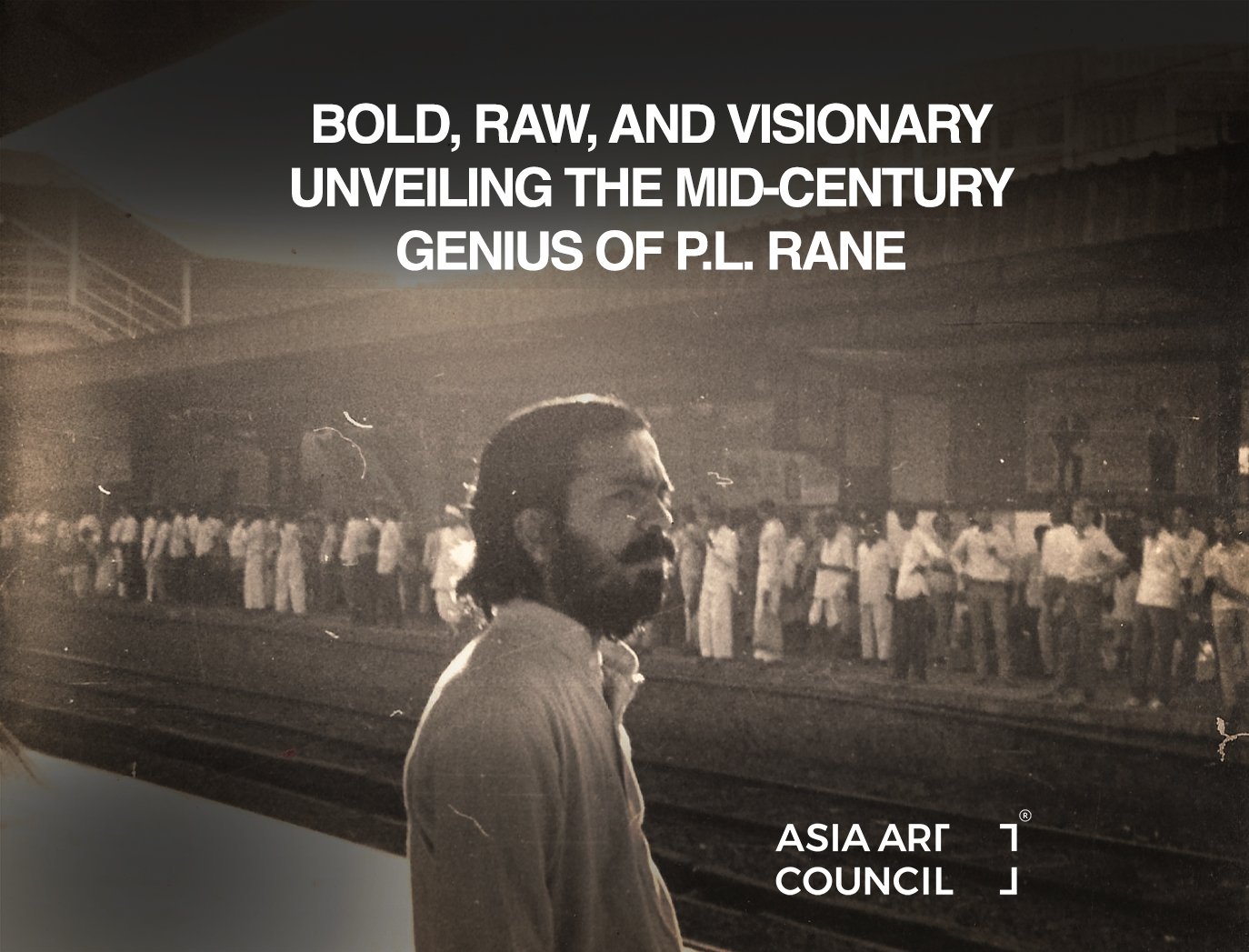
Art has a unique way of stopping you in your tracks. Recently, while visiting the C Cube Art Gallery in Thane, I had a transformative encounter. Standing before the works of Prakash Lakshmanrao (P.L.) Rane (1938–2016), I was completely stunned and held in absolute awe. His style, depth of thought, and staggering range of work put him on par with the finest modernists of his generation.
While the celebrated Progressive Artists’ Group (PAG) was redefining Indian art at the forefront during the mid-20th century, Rane was quietly carving out an equally profound, independent path. Working roughly from the 1950s through the 1970s, he shared a modernist, anti-establishment, and expressionist sensibility, blending raw social realism with striking echoes of Cubism.
If you haven’t yet discovered his brilliance, here is a look into the life, mind, and breathtaking oeuvre of an artist who captured the soul of a nation in transition.
Every great master stands on a foundation of rigorous discipline. Rane’s artistic journey began at the prestigious Sir J.J. School of Art, where he honed his technical mastery. Beyond his academic training, he further refined his vision under the esteemed guidance of S.L. & G.S. Haldankar. This blend of elite classical training and an insurgent, modern spirit allowed Rane to navigate seamlessly between realism, semi-realism, abstraction, and striking line work.
By 1960, he was already recognized as a visionary talent, catching the eye of critics and newspapers alike. His 1968 one-man show at the Chetana Art Gallery cemented his standing among contemporaries as an artist unafraid to challenge convention.
Exploring the Portfolios: A Nation in Three Acts
An exploration of Rane’s archives reveals an artist who refused to be boxed into a single category. His work is thoughtfully curated across three compelling pillars:
1. The New Woman: Portraying Grace, Power, and Pain
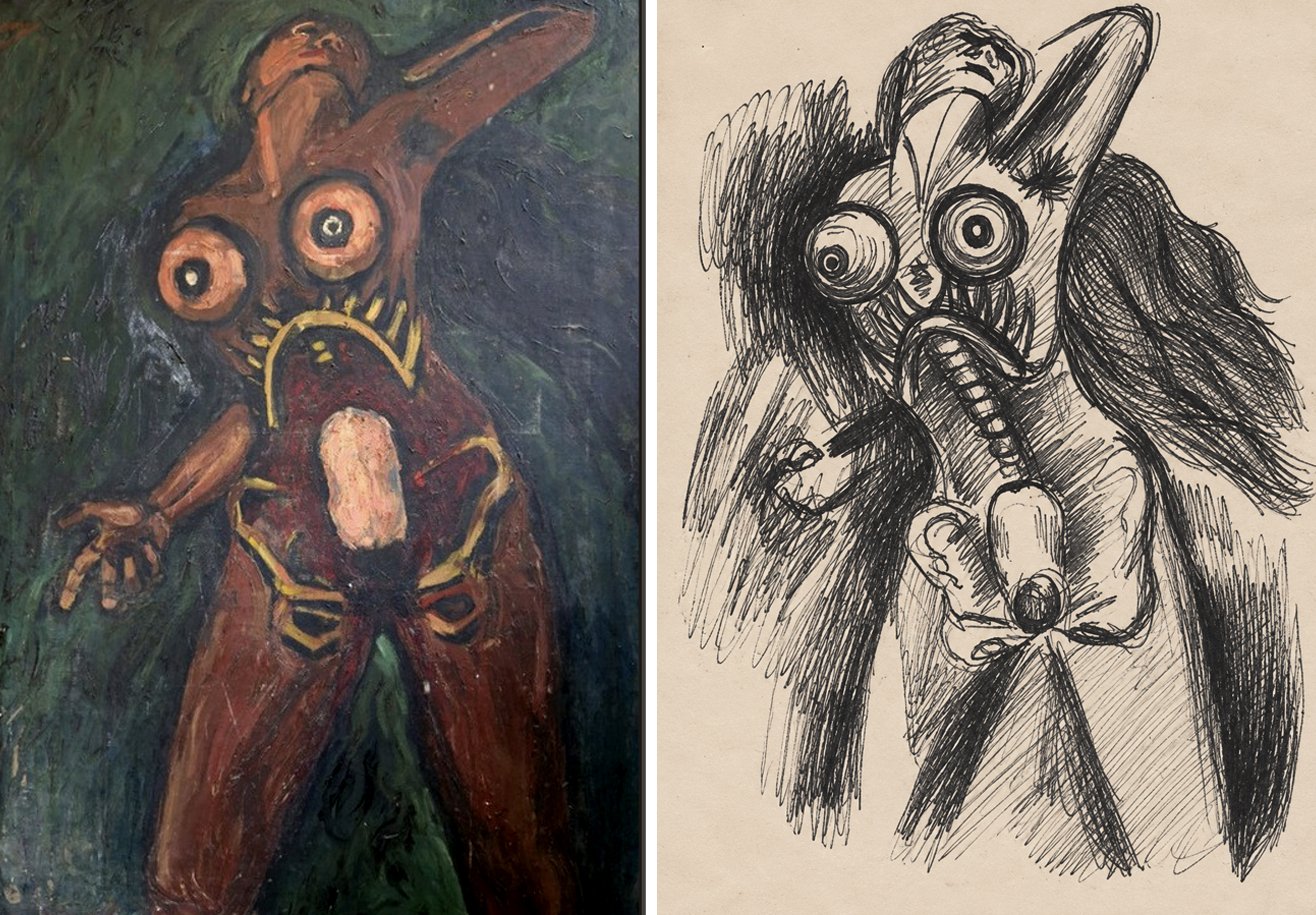
Long before empowerment became a mainstream cultural movement, Rane was quietly observing and documenting women as symbols of a changing India.
- A Birth Scream (Oil on Canvas): This is not a romanticized celebration of motherhood. Instead, Rane confronts the raw, visceral reality of labor pain—capturing the physical vulnerability and immense emotional struggle of creation. The scream transcends pain, transforming into a symbol of primal strength and sacrifice.
- Cubist Portraits: Featured prominently in his monograph studies, Rane’s profile and portrait studies showcase a sophisticated dialogue with European Cubism. By deconstructing the human head into sharp geometric planes and saturated color fields, he channeled a revolutionary structural intensity reminiscent of F.N. Souza.
- Devil Within Me (Oil on Canvas): A masterclass in psychological tension, this compact oil composition dives into the shadows of the human psyche using jagged, expressionistic forms and a brooding color palette.
2. The New Society: The Visual Documentary of Everyday India
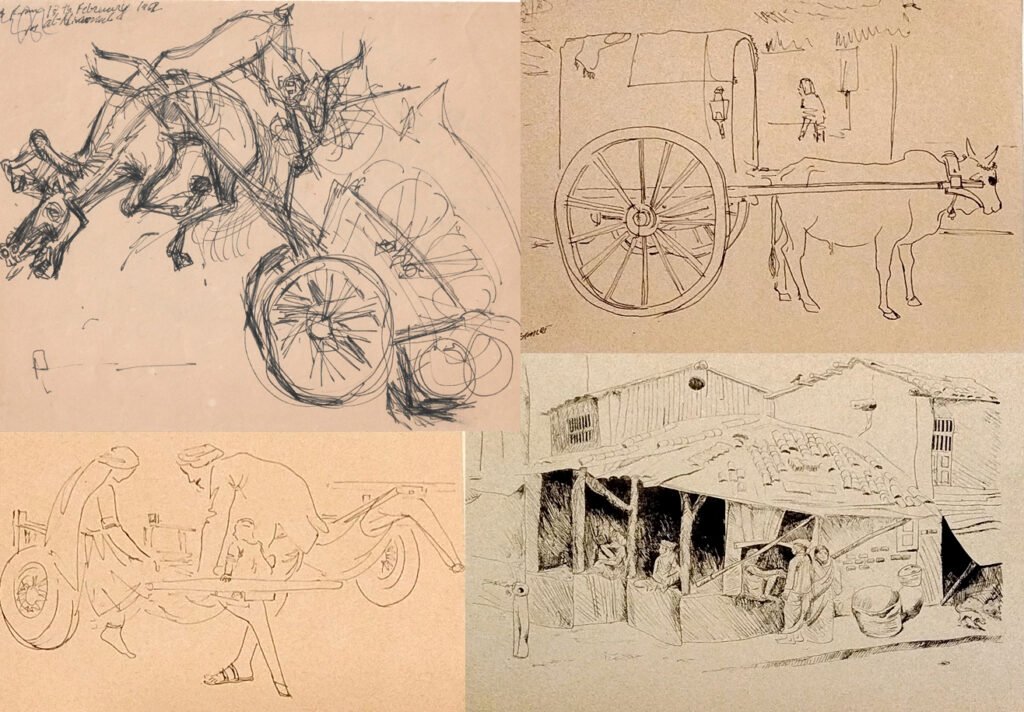
Rane didn’t paint India merely for aesthetic decoration; he observed it to record history. His sketches and ink studies act as a time capsule of a young nation finding its feet:
- Studies in Movement: From bullock carts and handcarts to bustling markets, boats, and beasts of burden, Rane caught everyday Indian life dynamically in motion.
- Human Settlements: His ink and watercolour drawings of streets, fort gateways, mosque arches, church towers, and rural dwellings preserve the rich cultural memory of a nation transitioning from tradition to modernity.
3. The New India & Radical Public Interventions (1973)
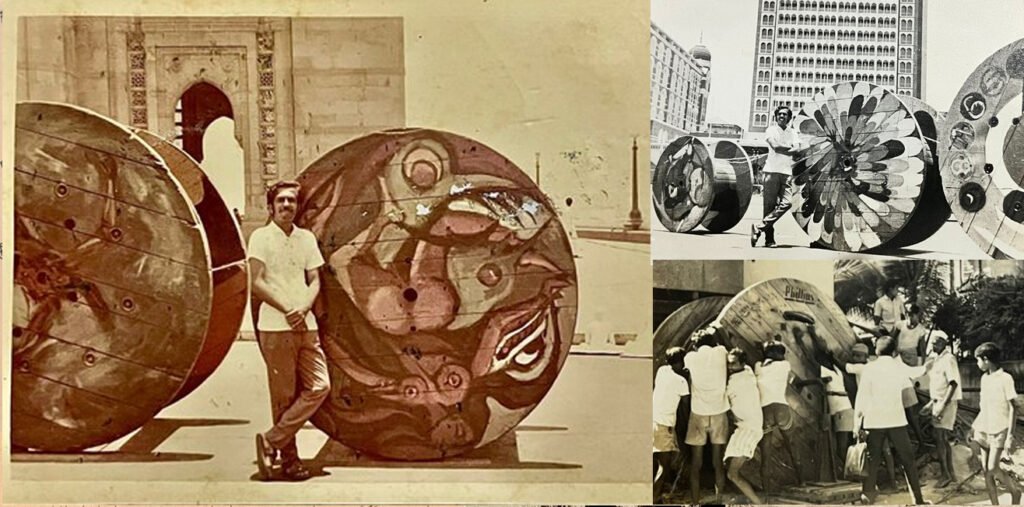
Perhaps one of the most astonishing chapters of Rane’s career occurred in April 1973. Long before “site-specific installation art” became a gallery buzzword, Rane took art directly to the public.
- The Telephone Cable Reels Project: Bypassing elite, closed gallery walls, Rane took massive wooden telephone cable reels, painted them with complex, swirling biomorphic compositions, and exhibited them as public sculptures right by the Gateway of India (an exhibition inaugurated by prominent leaders like Shri Sharad Pawar under the Mumbai Municipal Art Guild). It was a breathtaking, democratic intervention that brought avant-garde art out into the open air for everyday citizens.
An Invitation to Witness History
P.L. Rane was more than just a painter—he was a visual chronicler of India’s unfinished freedom, a master of printmaking, lithography, monochrome, and even expressive commercial photography. His ability to move from fluid, single-stroke divine line drawings of Ganesha and temple dancers to heavy, psychological oil paintings is nothing short of breathtaking.
If you are an art lover, collector, or history enthusiast who appreciates the undercurrents of Indian Modernism, you owe it to yourself to dive deeper into his legacy.
👉 Explore his incredible archives, rare portfolios, and the untold chapters of Indian modern art at plrane.com. Let’s make sure masters like P.L. Rane receive the resounding applause and historical recognition they so richly deserve.
Leave a Reply